Speaker
 Presentation in English
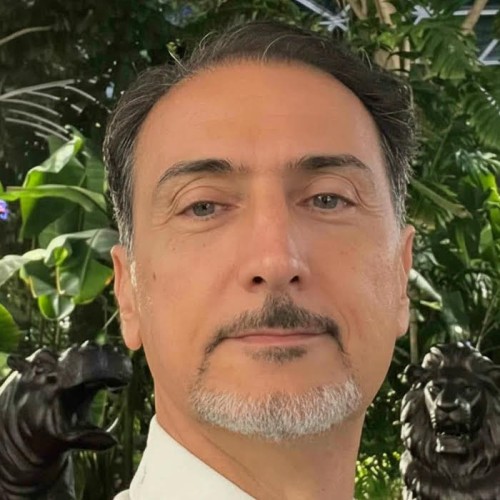
SALAHEDDINE ZIADEH
UNIVERSITY OF COLUMBIA. UNITED STATES
Dr. Ziadeh is a US licensed and trained clinical psychologist with two decades of experience in a variety of settings and roles—psychotherapy, education, consultation, training and supervision. He holds a doctorate and a master’s degree in clinical psychology from Rutgers University, a master’s degree in psychology from New York University, and two Bachelor’s degrees —one in psychology and social behavior—from the University of California, in addition to a host of professional certificates, academic honors and awards.
He trained in outpatient, inpatient, and emergency psychiatry at Montefiore Medical Center of The Albert Einstein College of Medicine and contributed in the graduate years to research at several institutions, including the Beth Israel Medical Center, the Ackerman Institute for the Family, and the Institute for Health, Care Policy, and Aging. His post-doctoral and current research interests include phenomenology, psychotherapy process and outcome, cultural adaptation, traumatic stress, creativity and resilience, and wellness programs.
Dr. Ziadeh has taught and practiced in United States and abroad. He has a special affinity for international and multidisciplinary work, is fluent in several world languages, and enjoys a broad cultural exposure. In the last decade, his contributions to the Global Mental Health field involved mental health research as well as training and supervision of treatment providers in various parts of the world (e.g., Bangladesh, Lebanon, Peru, Tanzania). This included cultural adaptation work as well as acceptability, feasibility, and dissemination studies.
In consultation as in practice, Dr. Ziadeh holds a pluralistic perspective, informed by a broad clinical repertoire and versatility in various schools of thought. His vision and practice reflect a compassionate stance as well as a natural propensity for creativity and integration. He is committed to the advancement of psychotherapy science and practice, and has participated in professional congresses around the globe.
Cultural Adaptation of Psychological Interventions

Psychological interventions cannot be assumed to apply equally well across cultures. For this reason, cultural adaptation is often necessary when these interventions are applied to different populations or regions. However, what constitutes cultural adaptation—both in terms of what should be adapted and the process by which components are identified for adaptation—is not universal. Theoretical perspectives and practical applications vary.
In this symposium, we present and discuss key themes in cultural adaptation, focusing on specific psychological interventions and practices, drawing on field experience, and highlighting relevant contextual factors. Approaches covered include cognitive behavioral therapy (CBT), group interpersonal psychotherapy (IPT), interpersonal counseling (IPC), and integration of Indigenous practices. The symposium explores multiple perspectives and contexts, illustrating how intervention strategies are shaped by cultural and situational factors.
Dr. Mokrue, a CBT practitioner and expert, reviews different frameworks for adapting CBT to diverse youths. Dr. Nenemay, with expertise in Native American cultures, discusses Indigenous practices in the context of mental health. Dr. Bernard, a mental health researcher at the University of Bordeaux, shares her experience adapting group IPT to primary care facilities in Senegal. Dr. Ziadeh draws on his experience training providers in wartime Ukraine and in non-conflict settings to discuss the cultural adaptation of IPC in wartime contexts.
Participants will gain insights into the conceptual and practical considerations of cultural adaptation, the identification of intervention components requiring adaptation, and the ways contextual factors influence implementation across diverse populations.
ORGANIZED BY

ASSOCIATE

WITH THE SUPPORT OF