Speaker
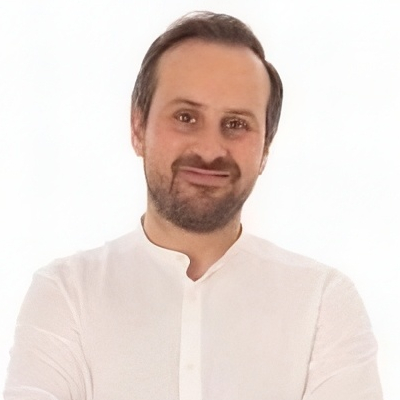
 Presentation in Spanish
ALEJANDRO DE LA TORRE
COMPLUTENSE UNIVERSITY OF MADRID. SPAIN
He is a professor in the Department of Legal Medicine, Psychiatry, and Pathology at the Universidad Complutense de Madrid. He is also the principal investigator of the Psychiatric Epidemiology and Mental Health research group (EPISAM) and a member of the Emotional Disorders research group at CIBERSAM ISCIII.
His profile combines academic, scientific, and professional work in the field of mental health and suicide prevention. He has actively participated in various initiatives at both national and international levels, contributing to the advancement of research and its clinical application. His solid interdisciplinary background has enabled him to establish himself as a researcher of recognized prestige, with significant contributions to the fields of psychiatric epidemiology, neuroscience, and psychology. He has authored more than 150 scientific publications in high-impact journals, reflecting an outstanding research trajectory.
His research lines encompass areas such as psychology, psychiatry, and biostatistics. In the academic domain, he maintains a broad teaching activity, delivering undergraduate and postgraduate courses across various programs in Health Sciences and Social Sciences. He is also strongly committed to educational innovation, participating in teaching innovation projects and Erasmus+ initiatives. In addition, he provides advisory services to companies and public institutional bodies at both national and international levels.
Finally, he is a member of the core group and advisory board of the National Action Plan for Suicide Prevention 2025–2027 of the Spanish Ministry of Health.
Artificial Intelligence and Natural Language Processing: New Frontiers in the Detection and Monitoring of Suicidal Behavior in Adolescents

Suicidal behavior in adolescence represents a critical public health challenge, aggravated by barriers to early detection and access to specialized services. This symposium presents cutting-edge advances at the intersection of Clinical Psychology and Artificial Intelligence, focusing on the use of Natural Language Processing (NLP) models to optimize the identification and monitoring of suicide risk in young populations.
Through four complementary presentations, the symposium explores the full cycle of technological intervention. From the methodological and ethical framework of large multidisciplinary projects, Dr. De la Torre will present evidence on the assessment of discourse-based markers derived from natural language in adolescents at risk of emotional disorders and suicidal behavior (ALENTAR-J-CM Project). Additionally, Adriana García will present a study on the use of machine learning techniques to understand complex phenomena such as non-attendance at psychological evaluations, analyzing the impact of family dynamics. Dr. Doval will present data on specific applications of transformer-based models (such as BERT) to improve clinical accuracy in hospital emergency settings involving suicide attempts. Finally, Dr. Scalingi will address the integration of clinical and linguistic variables to predict suicidal behavior among adolescents hospitalized following a suicide attempt.
ORGANIZED BY


ASSOCIATE

WITH THE SUPPORT OF