Speaker
 Presentation in English
EFRAT SHER-CENSOR
UNIVERSITY OF HAIFA. ISRAEL
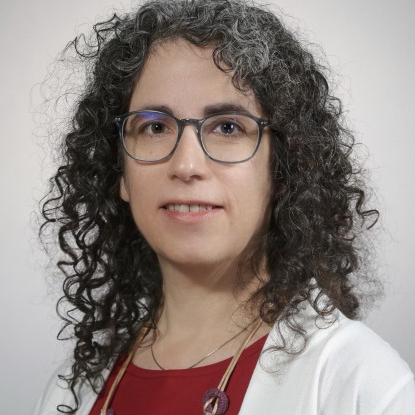
Efrat Sher-Censor is an Associate Professor in the interdisciplinary Master’s and PhD programs in Child Development at the School of Psychological Sciences, University of Haifa. Her research focuses on the representations that children and significant adults (parents, professional caregivers, and educators) construct regarding their relationships, and on how these representations shape joint interactions and child development from infancy through adulthood, from an ecological perspective. In her work, she examines how characteristics of the broad sociocultural environment (e.g., cultural values, migration/immigration, minority status, poverty, and residence in disadvantaged neighborhoods) shape children’s relationships with their caregivers. Her research integrates longitudinal designs with large samples and employs mixed methods, combining quantitative observational data, interviews, and questionnaires with qualitative approaches.
A central goal of her work is to develop new assessment tools that are accessible to practitioners in the field. For example, she refined a quantitative coding system for the five-minute speech sample, a brief, semi-structured interview with significant figures in the child’s environment. She also developed a questionnaire enabling professionals to assess parents’ adaptation to their children’s health or mental health diagnoses.
Prof. Sher-Censor has published over 50 articles in peer-reviewed journals and academic books. Her research has been supported by competitive research grants in Israel and the United States. She serves as a consultant to several organizations in Israel, including the Juvenile Diabetes Type 1 Association and the Developmental Psychological Clinic in the Haifa District.
Assessing Relationship Quality Between Parents, Clinicians, and Children with Developmental Conditions Using the Five-Minute Speech Sample (FMSS): Coherence and Mentalization as Key Dimensions

The Five Minute Speech Sample has been widely used in psychiatric and psychological research on parent–child relationships, primarily focusing on caregivers’ expressed emotions, such as criticism and emotional overinvolvement. Traditionally, this method has been applied to parents describing their children, both typically developing and those with developmental conditions or psychopathology.
This symposium extends the scope of the FMSS in two key ways. First, it advances the indices derived from the FMSS by focusing on two constructs informed by attachment theory: coherence and mentalization. Coherence refers to the ability to provide a multifaceted, internally consistent, and well-supported portrayal of the child, whereas mentalization reflects the capacity to interpret the child’s and own behavior in terms of underlying mental states, including thoughts, feelings, and intentions. Second, the symposium broadens the populations under investigation by including not only parents but also clinicians and expanding the target of narration to include not only the child but also the child’s parent.
Across four presentations from the UK and Israel, we will demonstrate the versatility of this approach: from parents of children with rare and ultra-rare diseases, to expectant parents prior to childbirth, and to paramedical professionals and developmental pediatricians narrating about children perceived as easy or difficult to care for, as well as their parents. Together, these studies support the utility of FMSS-coherence and mentalization in assessing relational representations across caregiving and clinical contexts. The brevity and ease of administration of the FMSS make it particularly well-suited for integration into both research protocols and clinical encounters. Importantly, this approach provides meaningful insights into caregivers’ and clinicians’ meaning-making of relationships, offering a tool that can inform assessment processes and contribute to professional training and clinical supervision.
ORGANIZED BY


ASSOCIATE

WITH THE SUPPORT OF