Speaker
 Presentation in English
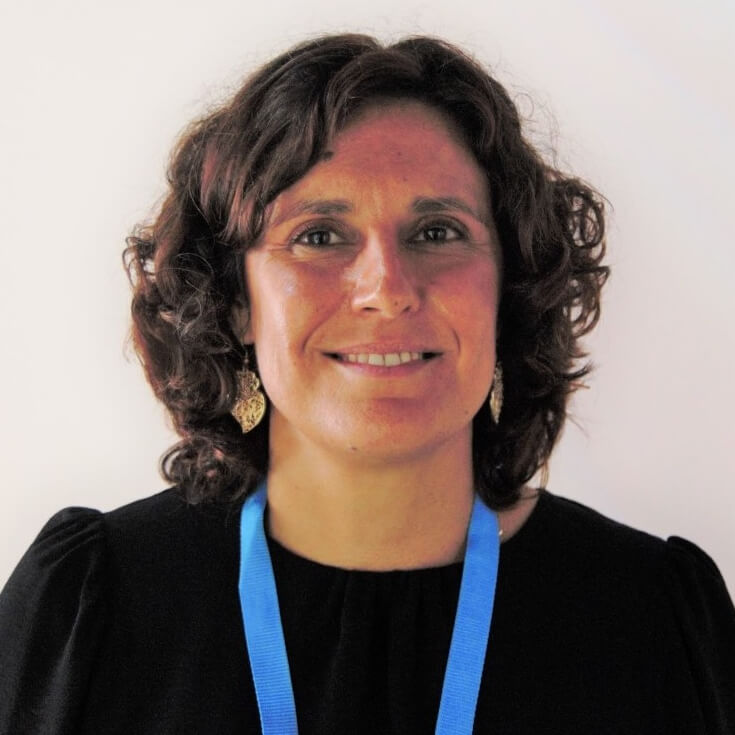
CÁTIA MARTINS
UNIVERSITY OF ALGARVE. PORTUGAL
Cátia Martins. Concluded the PhD in Psychology in 2014 at the University of the Algarve, Faculty of Human andSocial Sciences. She is an Assistant Professor in the Department of Psychology and Educational Sciences of theUniversity of the Algarve.
Coordinated the UAlg V + Volunteer Group of the University of the Algarve (between2018-2022) and was President of the Coordinator Commission of the Volunteering in Higher EducationNetwork (R-VES, between 2018-2022). Participates/ed as a researcher in various international projects, asErasmus + (ALPRODE, SEA-EU, MILAGE, LEARN + and Incollab), to national initiatives (LaCaixa Program”Aprender Juntos, Crescer em Família”). Researcher member of the MILAGE Aprender + App team, alsocollaborates / ou in regional initiatives (e.g., Escola do Futuro Aprender +). Member of the University ResearchCenter in Psychology (CUIP) of the University of Algarve, published more than 30 articles in specialized journal,26 in indexed journals, 9 book chapters and 4 co-authored books. Guided more than 20 master’s dissertations,and 6 PhD thesis. Member of WG4 Developing a standardization Framework on Skills EuroFam Net (AçãoCOST CA18123), she has collaborated in research on families at psychosocial risk with implications for practicein the European Union. She collaborated in the team that adapted and translated the Family Training andSupport Program (FAF) for Portugal.
Trainer of short courses for the community on platforms, transversal skillsin job search, among others. In my Ciência Vitae curriculum, the most frequent terms in the contextualizationof scientific, technological and artistic-cultural production are: Motivation; families; Volunteering; Learning;Community Psychology, Learning and Digital Tools in Education.
Promoting Psychological Well-Being in Children and Adolescents

Promoting psychological well-being in children and adolescents is an urgent priority in contemporary societies, given the increasing prevalence of mental health challenges and the growing complexity of developmental contexts. Within the framework of prevention and emerging approaches, this symposium brings together complementary contributions that examine how well-being can be fostered across key ecological contexts—family, school, and community—through integrated and culturally responsive strategies.
The symposium opens with a focus on individual-level processes, examining motivation to learn and perceived competence as key predictors of children’s quality of life. Motivation is conceptualized as a multidimensional construct encompassing school satisfaction, creativity, anxiety, expectations for challenge, and perceived competence, capturing the complexity of motivational dynamics and their relevance for early prevention.
The second presentation examines parental school involvement (PSI) as a central mechanism linking family and school contexts. Conceptualized as a dynamic and adaptive construct, PSI is analyzed within an integrative model including perceived social support and parenting stress. Findings highlight PSI as a critical protective factor in promoting children’s quality of life, while underscoring the role of social support and stress reduction in strengthening parental engagement.
The third presentation addresses childhood obesity from a preventive and psychologically informed perspective, emphasizing the role of family environments in shaping health-related behaviors. It highlights emotional dysregulation as a key mechanism associated with maladaptive eating patterns, reinforcing the need for early, family-centered interventions that integrate behavioral and emotional components.
The fourth contribution focuses on migrant adolescents, examining resilience and well-being through a comparative lens that includes both migrant and non-migrant youth. Findings suggest that adaptation is shaped by a constellation of individual, relational, and contextual resources, rather than migratory status alone. Particular emphasis is placed on the role of culture in shaping identity processes, coping strategies, and access to support, underscoring the importance of culturally responsive approaches to foster inclusion and well-being.
Overall, this symposium advances a multidimensional and context-sensitive understanding of psychological well-being, emphasizing the importance of early, integrative, and prevention-oriented approaches that connect family, school, and community systems to support positive development in diverse populations of children and adolescents.
ORGANIZED BY

ASSOCIATE

WITH THE SUPPORT OF