Speaker
 Presentation in English
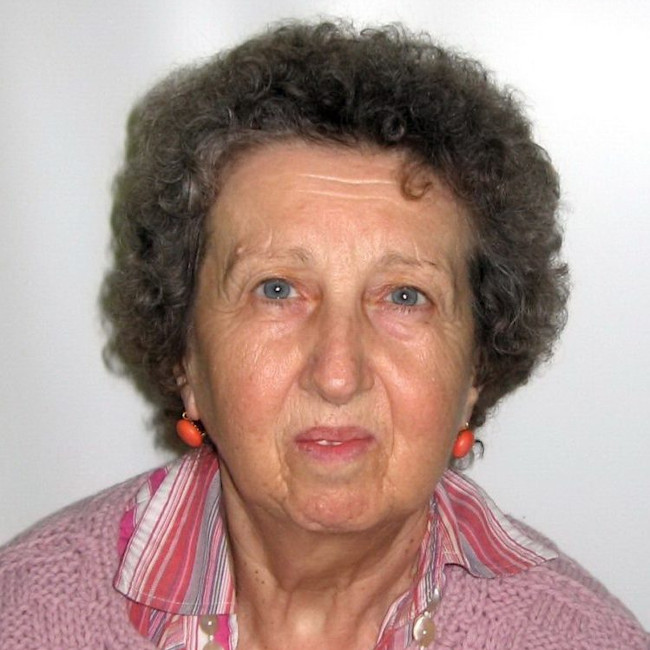
ADRIANA LIS
UNIVERSITY OF PADOVA. ITALY
Adriana Lis has been a Senior Professor since October 2014. From that date until October 2023, she was a contract professor of Psychology of Family Relationships and subsequently of Psychodynamic Models of Clinical Work with Children and Adolescents. She was a Full Professor of Theories and Techniques of the Psychological Interview, with teaching responsibilities in Clinical Psychology at the University of Padua. She also taught Personality Assessment Techniques and Theories and Techniques of the Psychological Interview. From the academic year 2002/2003, she directed for several years the Master’s program in “Psychological Interventions and Counseling with Couples and Families.” From 1998-99 until 2012, she directed the Specialization School in Life Cycle Psychology. She was a professor until retirement at the PhD. in Developmental Psychology and Socialization Processes. From the academic year 2024/25, she is an adjunct professor at the School of Specialization in Life Cycle Psychology. She was a member of the Board of Assessment of the EFPA (European Federation of the Psychologists Association). She is the coordinator of the Assessment Group of AIP (Italian Association of Psychology). She also currently conducts lessons and supervisions at the School of Specialization in Life Cycle Psychology at the University of Padua. She was the founder and head, starting in 1996 until her retirement, of the S. Fraiberg Laboratory, where psychoanalytically-oriented consultations and psychotherapies were carried out with children, adolescents, and adults. She was part of the Organizing Committee of the Psychological Assistance Service for university students.
Her clinical and research interests in the clinical field focus on consultation in developmental age, as well as the evaluation of psychotherapy. She also has methodological-clinical interests, including the in-depth study of techniques such as interviews, observation, questionnaires, and projective methods. The most current research topics concern the measurement of attachment and the detection of anxiety in developmental age. She has published numerous articles in national and international journals and several volumes.
Well-being and risk factors in youth

Over the past few decades, a growing body of literature has emerged which focused on emerging adulthood, a specific developmental period starting during late adolescence and lasting through early adulthood. Although compared to adolescents, emerging adults (aged 18-30) are more independent and have the chance to explore various roles and life domains, they do not see themselves entirely as adults, based on the belief that they have not yet fully formed individualistic qualities of character such as self-sufficiency, self-responsibility, and independence in decision-making including financial and psychological independence.
Like all transitional periods of life, emerging adulthood is an age of major opportunities for growth. However, it is also likely to be complicated by risks and challenges. The aim of this symposium is to focus attention on risks and protective factors concerning issues of wellbeing in different community samples of Italian emerging adults. Elide Francesca De Caro focuses her attention the Health Behavior in School-aged Children (HBSC-extended version) social media use, as a measure for assessing problematic social media use in young adults. The most relevant risk factors among mental health and personality functioning variables were examined to understand the vulnerabilities and mechanisms underlying the development of problematic social media use (PSMU), such as the mediation model linking depressive symptoms and interpersonal personality functioning. Giorgio Ghizzoni – within a project aimed to investigate psychological well-being and mental functioning in Italian university students aged 18 to 25 – focuses his attention to examine the associations between difficulties in emotion regulation, depressive and anxiety symptoms, mental well-being, self-efficacy, and academic stress.
Preliminary analyses show a coherent pattern, with greater emotion regulation difficulties associated with higher psychological distress and lower levels of well-being and self-efficacy. Veronica Raspa’s contribution using different questionnaires examines body-related experience in university students as a domain in which affective states, representational processes, and the relational dimension jointly contribute to the organization of the self. Preliminary findings indicate that depressive symptoms and self-mentalization are significantly associated with body appreciation. Micol Geminiani examines the psychological well-being of PhD students in Italy, focusing on key risk and protective factors. Dysfunctional lifestyle patterns, non-optimal parenting experiences, frustration of basic psychological needs, elevated academic stress, and perceived discrimination emerge as robust predictors of poorer wellbeing and increased maladaptive behaviors.
ORGANIZED BY


ASSOCIATE

WITH THE SUPPORT OF