Speaker
 Presentation in Spanish
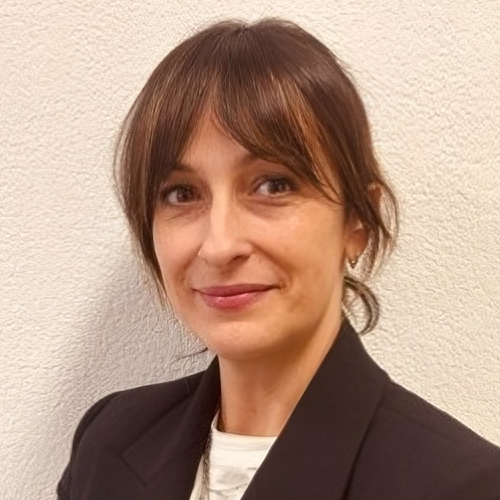
LAURA LÓPEZ ROMERO
UNIVERSITY OF SANTIAGO DE COMPOSTELA. SPAIN
Laura López-Romero holds a Ph.D. in Clinical Psychology and Psychobiology from the University of Santiago de Compostela (USC) and is a researcher in the Ramón y Cajal program at the Research Unit on Risk Behaviors and Developmental Disorders (UNDERISK; USC). Her research focuses on the development of conduct problems, with a special interest in identifying developmental trajectories from childhood to adolescence, considering the influence of individual and contextual factors. Among these, the role of temperamental and personality variables, such as psychopathic traits (emotional hardness, manipulation, impulsivity), stands out, seeking to understand how they are structured and developed in childhood, as well as the role of family variables, and parental educational styles and practices.
This line of research has generated significant scientific production, with articles published in national and international impact journals, most of them focused on the development of conduct problems and psychopathic personality in childhood and adolescence. Additionally, it has allowed her to present more than 70 papers at multiple congresses organized by nationally and internationally relevant scientific societies. Furthermore, she has participated in R&D projects funded by regional and national public calls.
Currently, she is conducting part of her research work in the longitudinal project ELISA (Longitudinal Study for Healthy Childhood), recently initiating a complementary research line (ELISA Socioemotional) focused on the analysis of emotional processing, recognition, and expression regarding conduct problems.
Advancing the understanding of conduct problems through a multi-method perspective

Child and youth conduct problems represent a major public health concern due to their high prevalence and their association with a wide range of adverse outcomes. Despite decades of research, important questions remain regarding the mechanisms underlying the developmental heterogeneity of conduct problems. A large proportion of the existing research relies primarily on questionnaire-based measures, which, while highly informative, may capture only part of the complex processes involved in the early emergence and later maintenance of problematic behavior.
In recent years, there has been increasing interest in combining multi-method approaches that integrate behavioral, emotional, physiological, and technological tools to obtain a more comprehensive understanding of these difficulties. Bringing together research across different developmental stages and contexts, this symposium aims to illustrate how integrating diverse methodological approaches can shed new light on the mechanisms underlying the development of conduct problems. Across four presentations, we first explore developmental trajectories of conduct problems across childhood and how they relate with deficits in emotional processing. We then consider the heterogeneity of conduct problems by examining the role of anxiety and callous-unemotional traits in identifying distinct subtypes in childhood and adolescence and their longitudinal associations to multiple neuro-physiological systems.
The third presentation focuses on assessing differences in facial emotional expression between conduct disorder subtypes (i.e., with and without limited prosocial emotions) in a forensic sample of female adolescents. Finally, we introduce the use of virtual reality for assessing early indicators of conduct problems, highlighting how emerging technologies may open new avenues for research by improving assessment protocols. Together, these contributions highlight the value of integrating multiple methods and levels of analysis to advance our understanding of conduct problems, offering novel insights into their developmental heterogeneity across contexts and populations.
ORGANIZED BY


ASSOCIATE

WITH THE SUPPORT OF